“But I have nothing to hide.”
This sentence often comes up when privacy is discussed. Many people assume that privacy only matters for politicians, companies or people with sensitive secrets. In everyday life, the topic seems far away for many.
But reality looks different. Every day we leave digital traces – when shopping online, on social networks, when searching or even when reading the news. Often we don’t even notice how much information is collected about us.
The problem: the consequences often only become visible once something has already happened. Unwanted advertising, phishing attacks, data leaks or identity misuse usually begin long before those affected even notice that their data has been collected.
What does privacy actually mean?
Privacy means that you decide for yourself who collects, stores and uses your personal information.
This information includes, for example:
- Your name and email address
- Your phone number
- Your location
- Your browsing behaviour
- Your interests and shopping habits
- Information about your devices
When it comes to privacy, many people immediately think of passwords or bank details. In fact, seemingly harmless information can also be very valuable. When many small data points are combined, a detailed profile of your behaviour, your interests and your everyday life emerges.
That is why privacy is not about hiding something. It is about keeping control over your own data.
Why do companies collect so much data?
Data is an important economic factor today.
Many online services are funded by advertising. To make ads as effective as possible, ad networks try to find out which products, topics or services might interest individual users.
So-called trackers are often used for this. They analyse, for example:
- Which websites you visit
- How long you stay there
- Which products you look at
- Which search terms you enter
The more information is collected, the more precisely user profiles can be created.
For companies this can make economic sense. For consumers, however, it often means a loss of digital privacy.
Why privacy affects families, freelancers and small teams
Privacy is not a topic only for large companies or IT experts.
Families
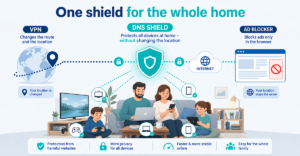
Children today use tablets, smartphones and computers from a young age. Many parents don’t know what data apps, games or websites collect. Privacy helps to better protect the digital privacy of the whole family.
Freelancers
Freelancers often work with customer data, emails and online services. If this information is insufficiently protected, both business and personal data can be affected.
Small teams
Small businesses are also attractive targets for cybercriminals. They often don’t have their own IT departments and rely on standard solutions. A conscious approach to privacy reduces risks and strengthens customer trust.
What can the consequences of a lack of privacy be?
Privacy is often only taken seriously once a problem has already arisen.
Possible consequences are:
More tracking and advertising
The more data is collected, the more precisely ad networks can create user profiles. This often leads to personalised advertising on almost every website.
Phishing and fraud attempts
Cybercriminals use collected information to create convincing scam messages or fake websites.
Data leaks
Even large companies are not safe from security incidents. If personal data falls into the wrong hands, it can be misused or sold.
Loss of privacy
Many people feel uncomfortable when companies or ad networks collect detailed information about their behaviour.
How can you protect your data better?
Privacy doesn’t have to be complicated. Just a few measures can make a big difference.
- Update software and apps regularly
- Use strong passwords
- Activate two-factor authentication
- Check privacy settings
- Reduce tracking cookies
- Avoid suspicious links
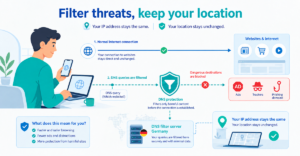
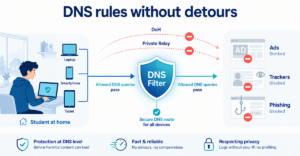
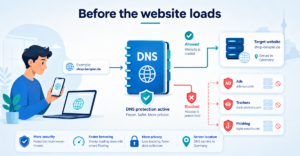
In addition, it can make sense to block known tracking, ad and phishing domains at network level.
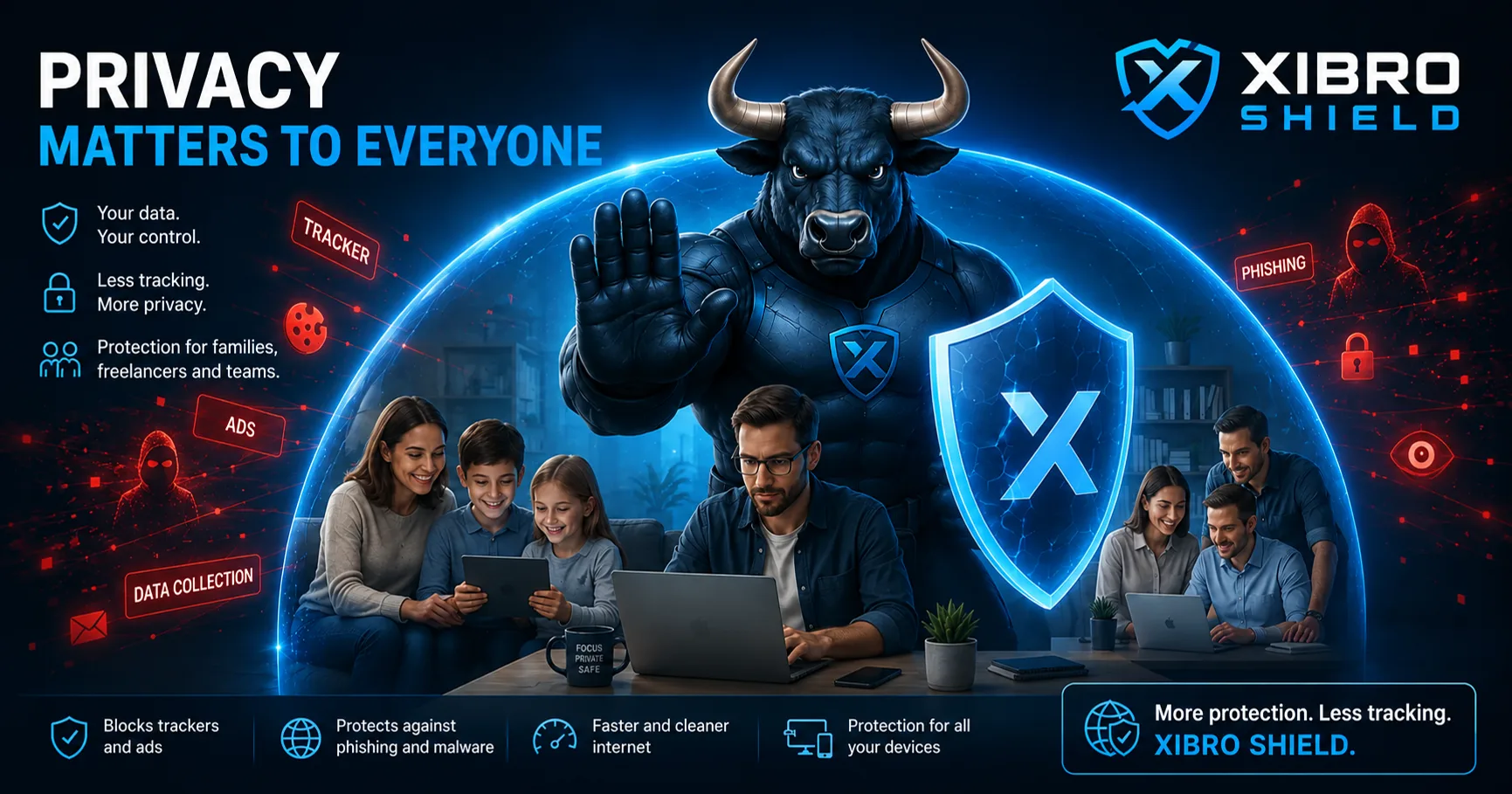
This is where XIBRO SHIELD comes in. The service filters many known ad and tracking services via DNS and thereby reduces the amount of data that is needlessly transferred to third parties.
For families this means more protection on several devices. Freelancers benefit from a cleaner and more focused working environment. Small teams can improve their digital privacy without having to set up complex security solutions.
XIBRO SHIELD works as DNS protection via a WireGuard tunnel. The public IP address stays unchanged, while known ad, tracking and phishing domains are blocked.
Conclusion: privacy starts long before the problem
Privacy is not only important for people with secrets. Every internet user leaves digital traces every day that can be collected, analysed and evaluated.
Protecting your data not only reduces unwanted tracking and advertising, but also improves your own security online. Families, freelancers and small teams in particular benefit from a conscious approach to digital privacy.
With XIBRO SHIELD, additional protection against tracking, ad and phishing services can easily be integrated into everyday life.
Try XIBRO SHIELD and enjoy more control over your digital privacy at xibro.de.